 Login
Login
This year has been different for me… mixed Y2-4 class with a new job share, a high number of children with EHCP’s and accessing an EYFS focused curriculum alongside lots of pastoral support. Across Autumn term, the rules, routines and wider systems were embedded alongside a curriculum that met the children with a “history curriculum needs to greet them at the correct developmental stage, take them by the hand and explain how history works, using contexts and cues they will readily recognise and be able to make sense of.”[i]
Their history curriculum began with changes in toys. This involved provision-led learning using my childhood toys and change through familiar contexts such as Lego and Mario. In Spring, we felt the children were ready to delve into more abstract history while focusing on a concept the children were familiar with from previous exposures via fairy tales, books, and more.
What was the enquiry sequence?
Pre and contextual learning:
- What is a castle?
- What did they look like?
- Where are they found in the United Kingdom?
- Which geographic features influenced their location?
- Provision including a toy castle and other linked areas.
History sequence:
When and why were castles built?
- What did castles look like? (focusing on real castles)
- Who built them?
- What were they used for?
- What role did lords and knights have?
- How do we know about their roles?
- What can we learn from armour?
Setting the scene:
The children had been taught history lessons before but a number of them find retention incredibly difficult. This was particularly revealing when they were adamant they had learned changes in toys the previous year but could not remember any of the learning even with prompts and visuals. Therefore, we decided to focus on introducing content as brand new even when they thought it had been studied before. A key area of emphasis was utilising Melton’s implications of short-term memory for a general theory of memory.[ii] This prioritised the importance of initial attention and encoding to secure the desired knowledge into ‘storage’ effectively. As I heard Kate Jones say at a recent conference: “You can’t retrieve what isn’t there.”
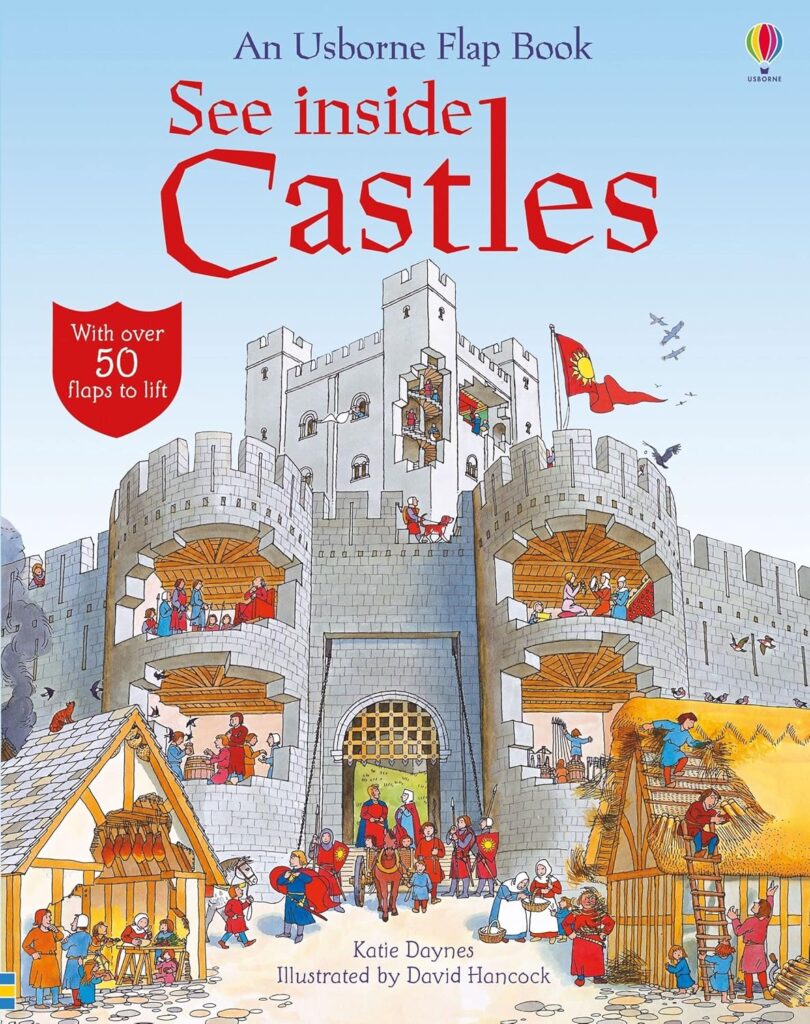
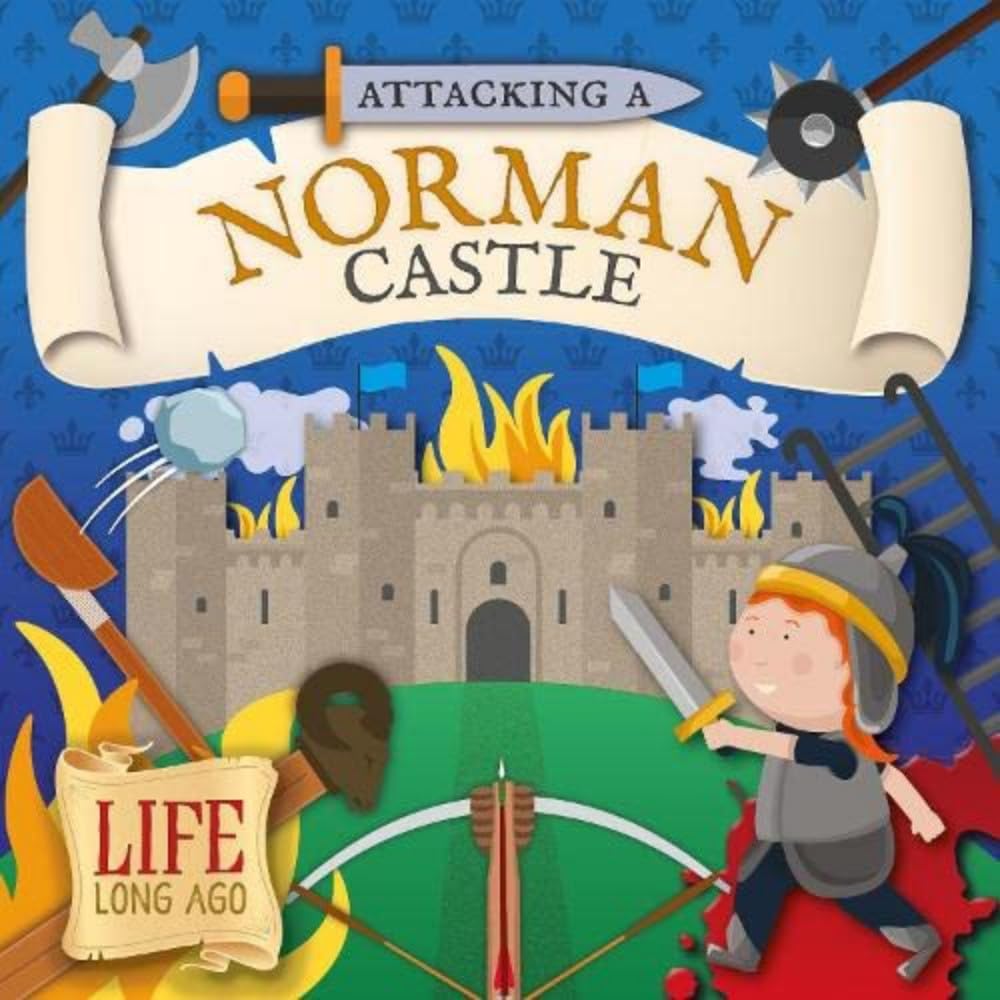
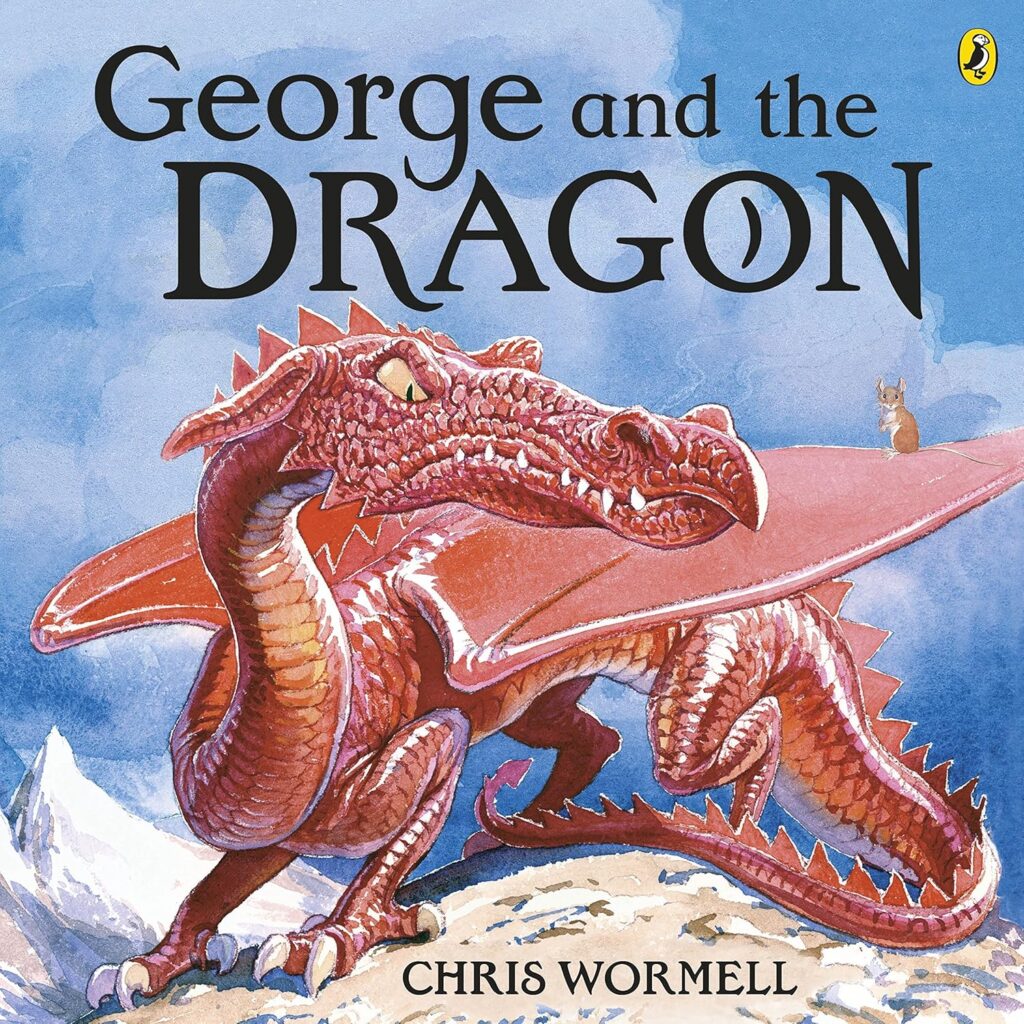
Before we began the unit of history, the children learned about castles through an English unit using the book to support their learning and fictional book to add intrigue alongside a bit more joy. It included the names of castle features, some of the differing roles found in a castle, and events linked to castles. This embedded some introductory knowledge and acted as the beginning of the schema for many. The children practised using the tier 3 language in context which helped with subsequent history teaching. It also continued to develop the children’s foundational knowledge (the base level of language and communication, reading, writing and mathematics that students will need to have secured if they are going to be able to access the wider curriculum)[iii] In addition, they played with the toy castle as a way to support their use of the vocabulary and role play the roles explored in the books.
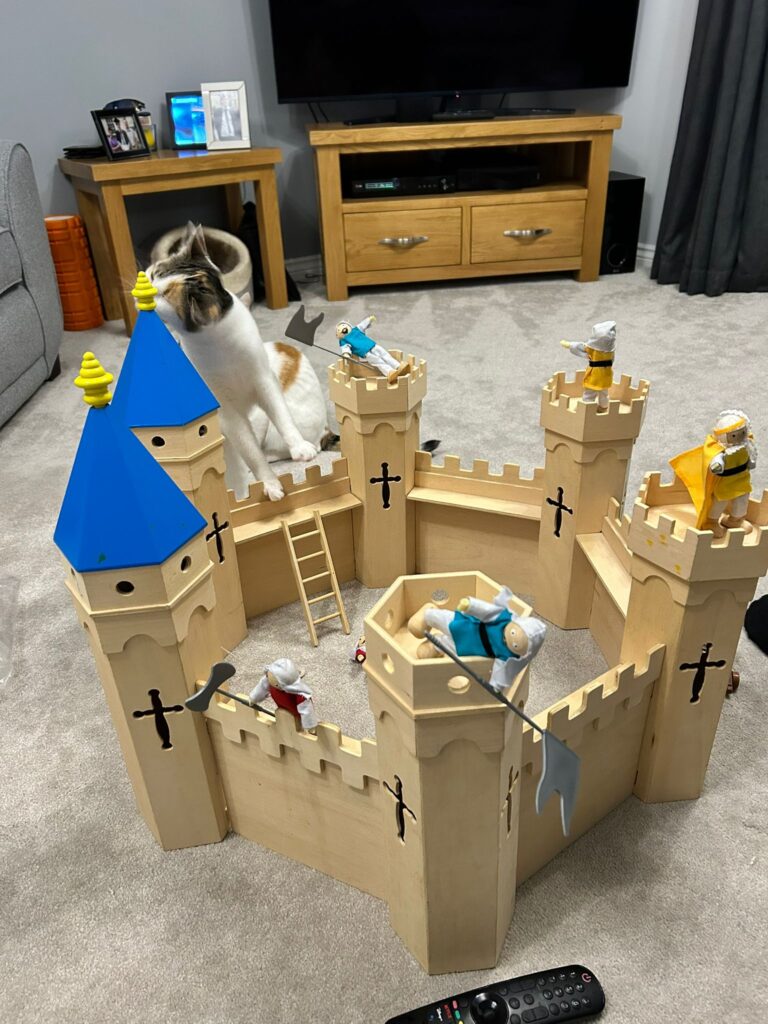
The driving principles across teaching this unit included the following:
- Precisely crafted questions given the highest status throughout the lesson
- clearly defined endpoints to consolidate and assess learning in the moment
- retrieving the narrative of the unit so far to embed it and connect as appropriate
- engaging with disciplinary concepts at a developmentally appropriate level
- children enjoying the myth, the magic and the stuff we don’t know.[iv]
The methodology of historical enquiry:
Enquiry is at the heart of the history teaching sequence and refers “to the complex tools, methods and assumptions that historians draw on. It is important to note that ‘historical enquiry’ describes the way that historians approach the study of the past.”[v] This is why the unit’s emphasis is prescribed by the overall enquiry question which is broken into sub-enquiries. They act is a vehicle to focus attention and prioritise the core over the useful hinterland. Each question functions by cumulatively adding to the children’s understanding.
The overall enquiry consists of three broad phases:
P1. What are castles including functional background knowledge/vocabulary.
P2. What purpose did they serve?
P3. Who used them and how do we know?
Task design:
The level of need in the class made the use of video and images were easier for the children to interact with alongside some text read with the teacher. The purpose of the sources was to start developing their understanding that our knowledge of the past comes from sources that come in different forms; then, gently focus their minds on building a detailed picture of the past by using multiple sources to add detail to our understanding.
With repeated prompting, the children began to loo closer… not just surface level features but specific features and the considering what they meant… (see third image).
At each stage, time was invested into modelling how we think in history; what we already knew as a start point to build on; then adding the new knowledge into the ‘mix’. This resulted in consistent use of similar sentence stems to build fluency and opportunities to practise in different ways. This requires more work but the children’s increasing confidence and fluency was a good step in the right direction.
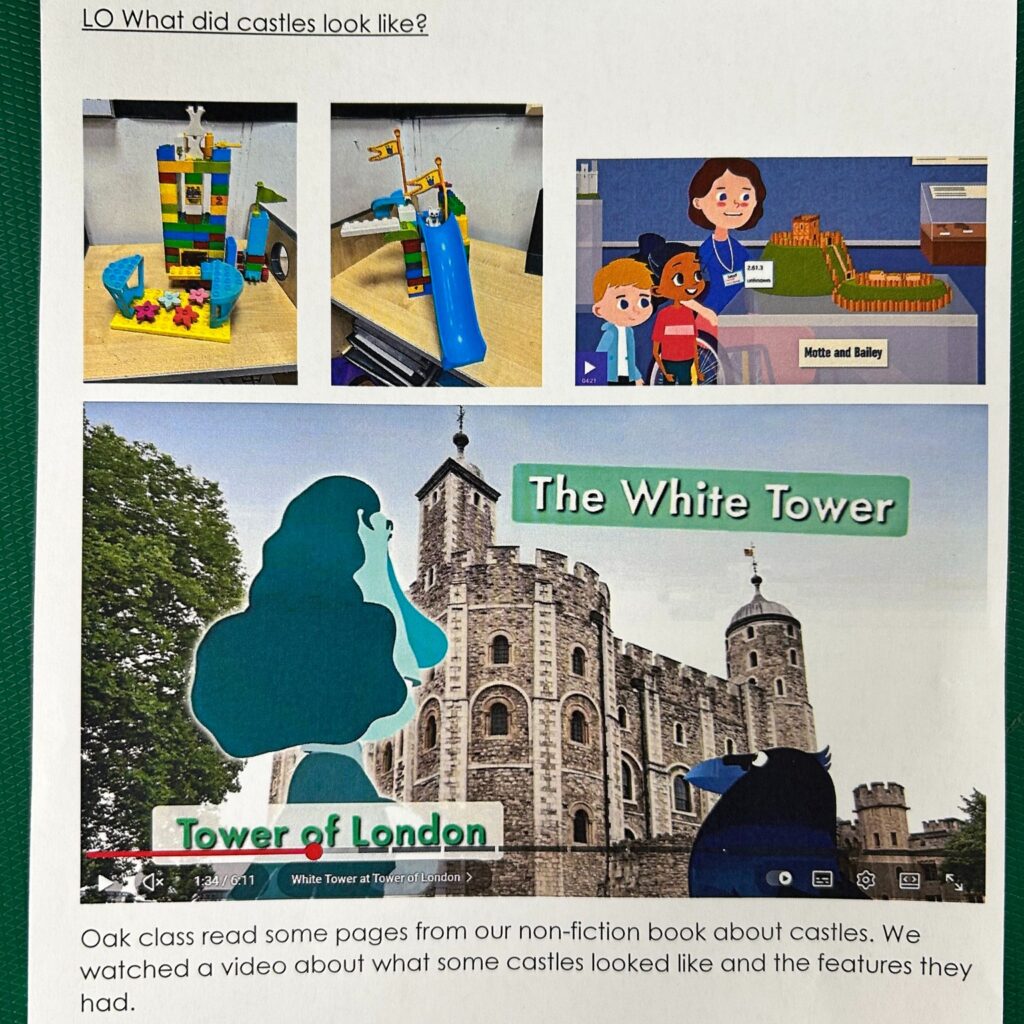
In the first lesson, we focused on introducing real examples of castles using a new video resource from the Historic Royal Palaces. This focused the children’s thinking on ‘real’ castles as their prior learning had come from fictional contexts.
It included the tier 3 vocabulary we had learned and prompted the children to make connections. After using the examples from the video, we built our own castle models (with some creative touches that prompted conversations about accuracy).
Then, one of the children asked if all real castles were made of stone and this BBC Bitesize series provided additional context across the week.
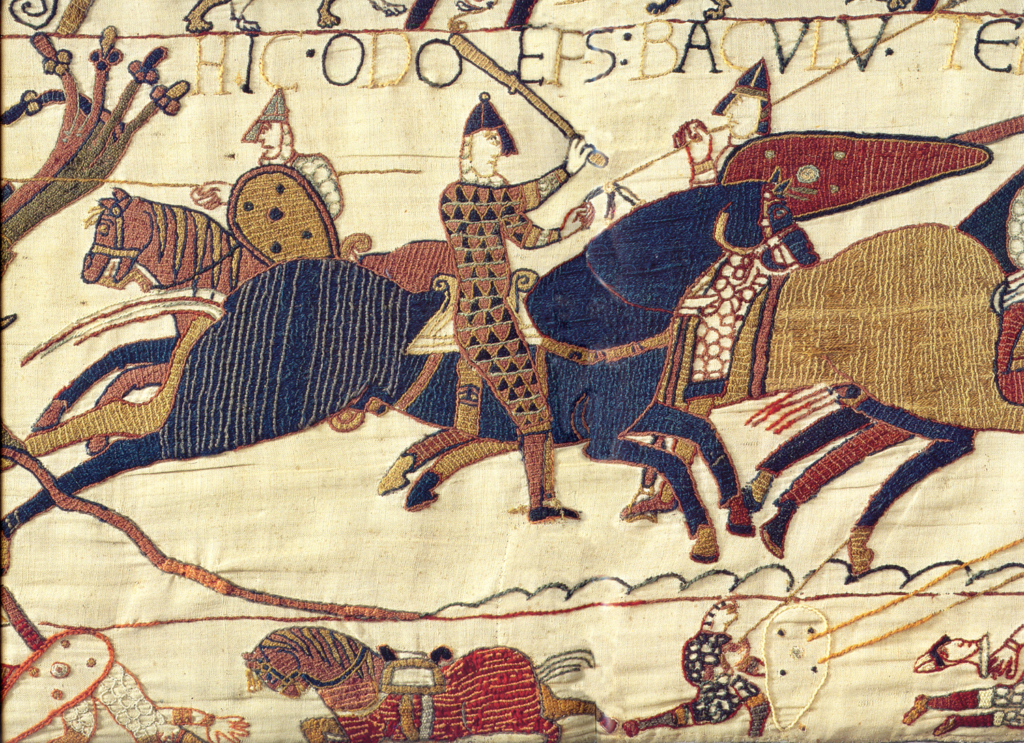
After explaining the purpose and perspective of the Bayeux Tapestry, I used this piece to illustrate the military role played by Norman nobility. This particular piece includes Bishop Odo (William the Conqueror’s half-brother).
The children identified the armour they wore, weapons they were using, and that they were riding horses. This was followed up with their role in governing post-conquest. It focused on the importance of looking closely.
The outcome was a sentence which explained the role of lords and knights in conflict and governance.
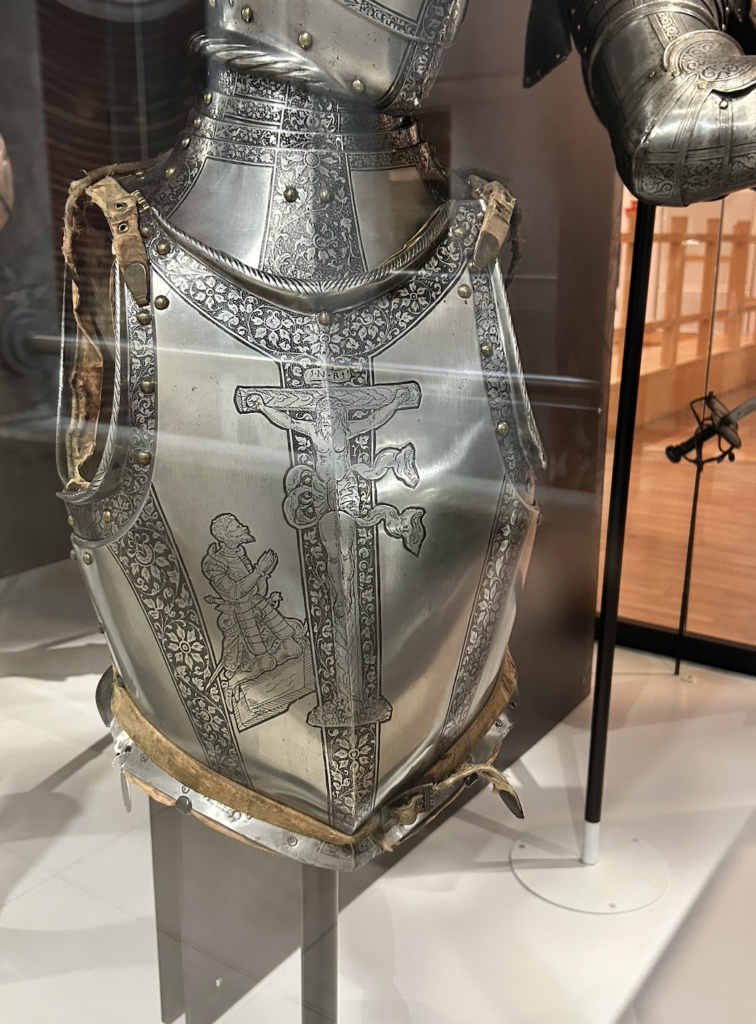
After the children had solidified their understanding of lords and knights in previous lessons, we focused on what else could be learned about lords and knights through their armour. We used photographs I took when visiting the Royal Armouries (Leeds).
We guided the children to look closely at what they could see on the armour AND why it might be there. The children identified the crucifixion (called it Jesus on the cross) so the man was Christian. They were prompted to look for any other aspects of Christianity and they found the man praying.
By the end of the lesson, the children spoke and then finished a sentence saying that some armour showed wealth (from other examples) and what was important to the owner (faith).
Communicating endpoints:
A number of the children found it difficult to communicate their thinking clearly during lessons therefore we needed to include more time for these outcomes we had budgeted in Autumn. Taking inspiration from English, this was built up across the unit beginning with the use of vocabulary via a shared write and working towards finishing sentences from provided example stems.
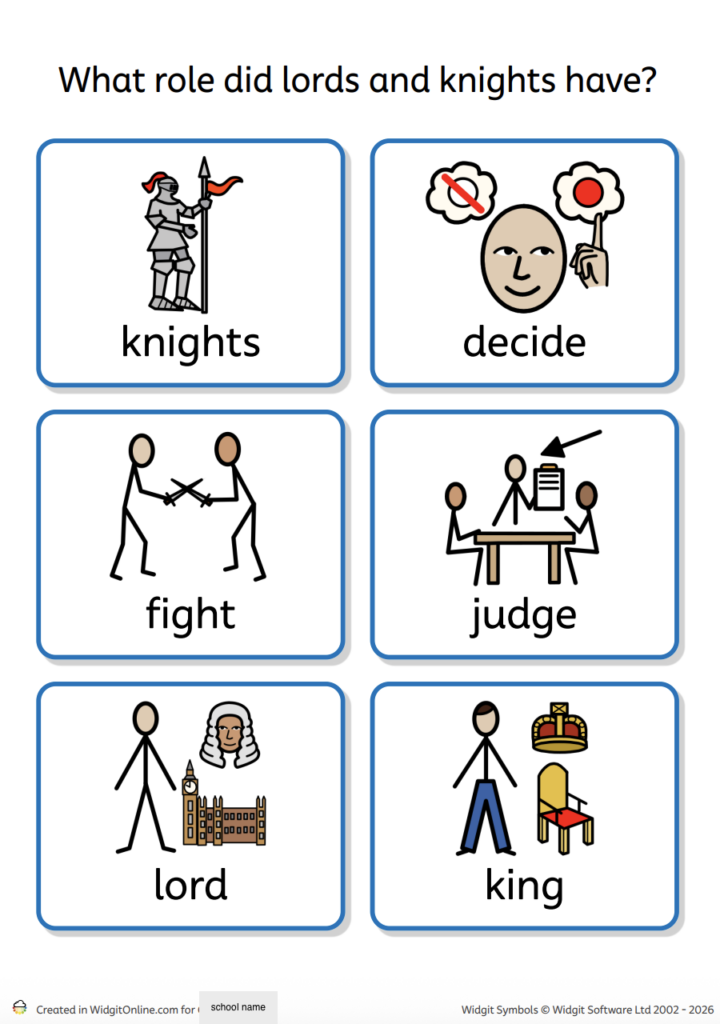
In addition, the school make extensive use of widgit images to support the children’s learning and communication across the curriculum and pastorally. In the lesson on the role of lords and knights, the image cards were used to support discussion and communication. We used the images to construct the flow of a sentence and support the children when speaking. For some, this transitioned into a written answer but was not the expectation for all.
One child has an adapted iPad that we have been loaned from a specialist setting which has transformed their ability to communicate independently. It includes clickr that has a dictation feature and the ability for teachers to create word banks that children can drag and drop into sentences. Last but most definitely not least, once a sentence is complete, the sentence is read to the child to ensure it is what they intended to communicate.
Lessons for next time:
- More opportunities for time in provision and role play would have been better! Imagination is a powerful tool.
- Frontloading knowledge and vocabulary via non-fiction benefitted what the children understood and how they communicated.
- Children making use of widgit and clicker to support communication was helpful but this can be developed further.
- Making time for the communication of what we’ve learned was important and powerful… embed this approach across other humanities lessons.
[i] Simplicitus Altius by Emma Turner, P133
[ii] A. W. Implications of short-term memory for a general theory of memory cited in Jones, K Retrieval Practice Primary pp. 26-27
[iii] https://www.tes.com/magazine/teaching-learning/general/what-is-foundational-knowledge-in-schools
[iv] Based on the quote from H. Carr and S. Lipscomb, What is history, now?, p. 4
[v] https://www.gov.uk/government/publications/research-review-series-history/research-review-series-history